
The Power of Storytelling: Make Them See It, Make Them Feel It
There is so much power in a story. But here is the catch most people miss: you have to know how to tell one. A list of facts informs. A story moves. And the difference between the two comes down to a single skill - making it visual.
Think back to telling scary stories around a campfire, or in a dark room with friends. It was always obvious who the best storyteller was. When they described the figure hiding in the closet, you could see it. They built it in such detail that you felt the suspense in your chest. Your hand on the doorknob, afraid to turn it. The way your skin jumped right off your body when the door swung open. You were not listening to that story. You were inside it.
That is the whole game. The best storyteller did not have the scariest monster. They had the most vivid one. They made you do the work of picturing it, and once you pictured it, you felt it. Marketing is no different. People do not buy because of your features. They buy because they saw themselves in a story and felt something about where it was going.
What Makes a Story Actually Land
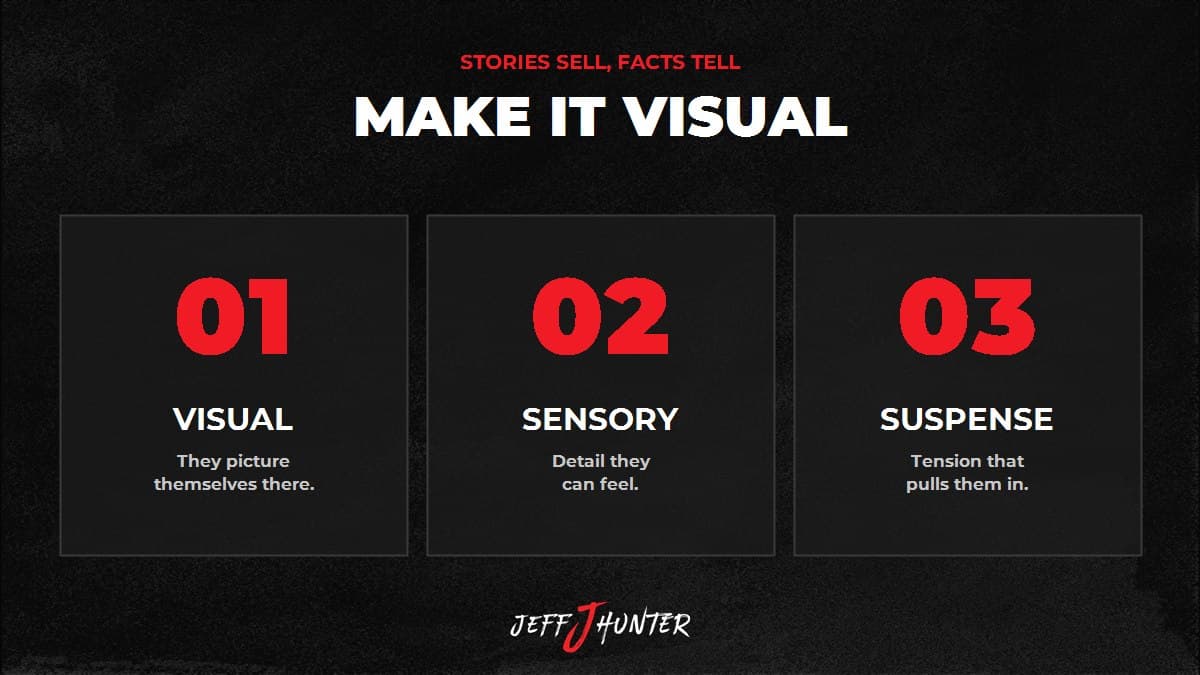
Strip it down and three things separate a story that sticks from one that slides right off:
- Visual. The audience has to be able to picture it. If they cannot see it in their head, they are not in the story, they are just hearing words.
- Sensory. Specific detail they can almost feel. The crackle, the cold doorknob, the held breath. Detail is what turns a scene from abstract to real.
- Suspense. Tension that pulls them forward. A story without a question the audience wants answered is just a sequence of events.
The Campfire Test
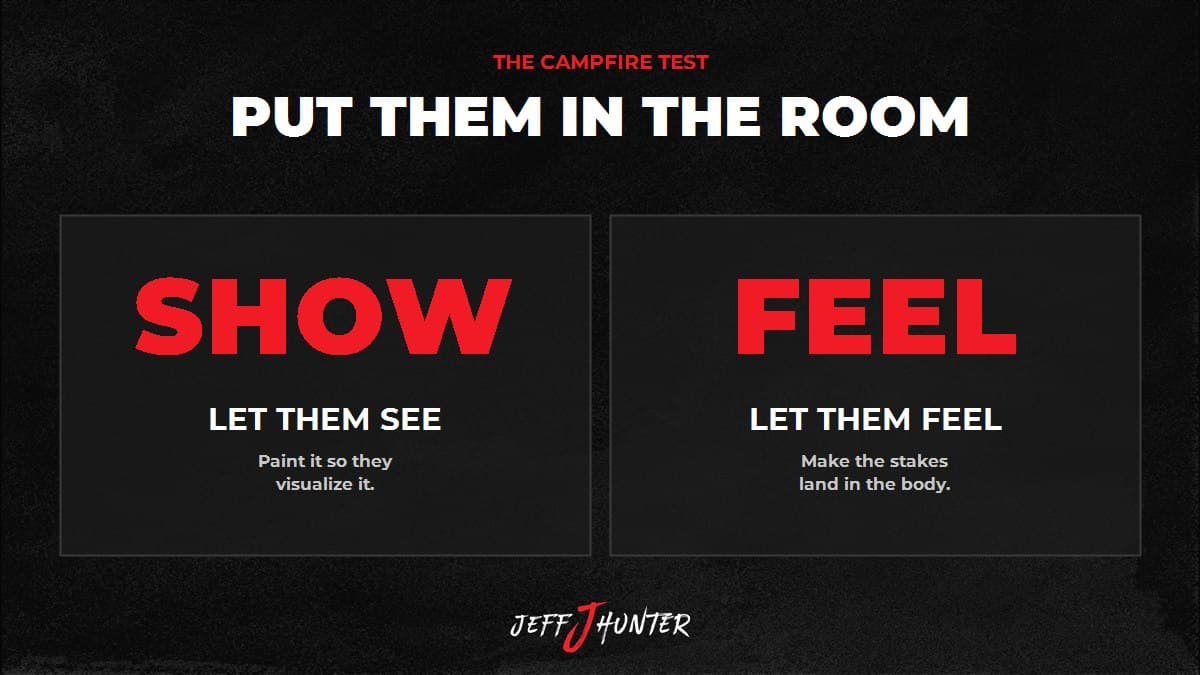
Before you publish any story - in an email, a post, a sales page - run it through one filter I call the campfire test. Would it hold a room in the dark? Can the reader see it, and does it make them feel something? If you are only telling them what happened, you are giving a report. If you are putting them in the room, you are telling a story.
The Simple Arc Underneath It
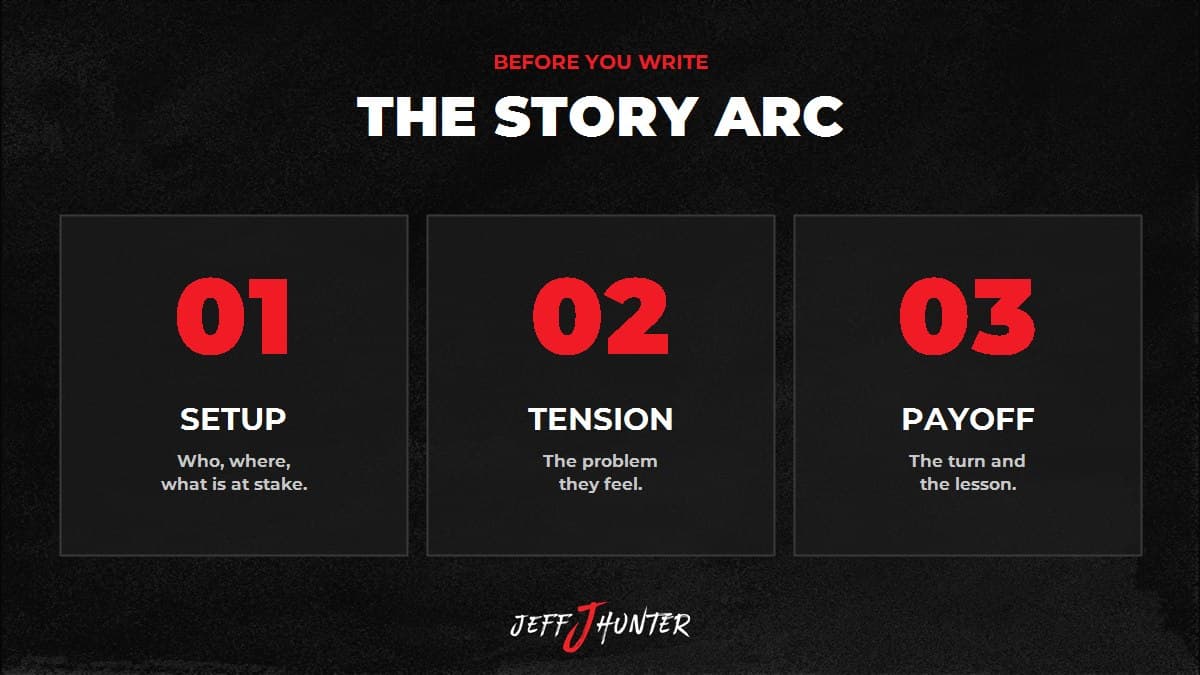
You do not need a screenwriting degree. Almost every story that works rides the same simple arc:
- Setup. Who, where, and what is at stake. Give the audience just enough to stand inside the scene.
- Tension. The problem, the fear, the thing that could go wrong. This is the part people actually feel.
- Payoff. The turn and the lesson. What changed, and what it means for them.
Facts tell. Stories sell. The story does not just carry your message - it makes the audience live it, and people act on what they feel.
So be honest with yourself on the next thing you write: could the reader visualize it? If not, go back and make it visual. This is the skill underneath great copywriting, great branding, and a great personal brand - and it is the human half of the work AI can amplify but never replace, which I get into in how to use AI to build your personal brand.