AI Has a Consent Problem. Meta Just Proved It.
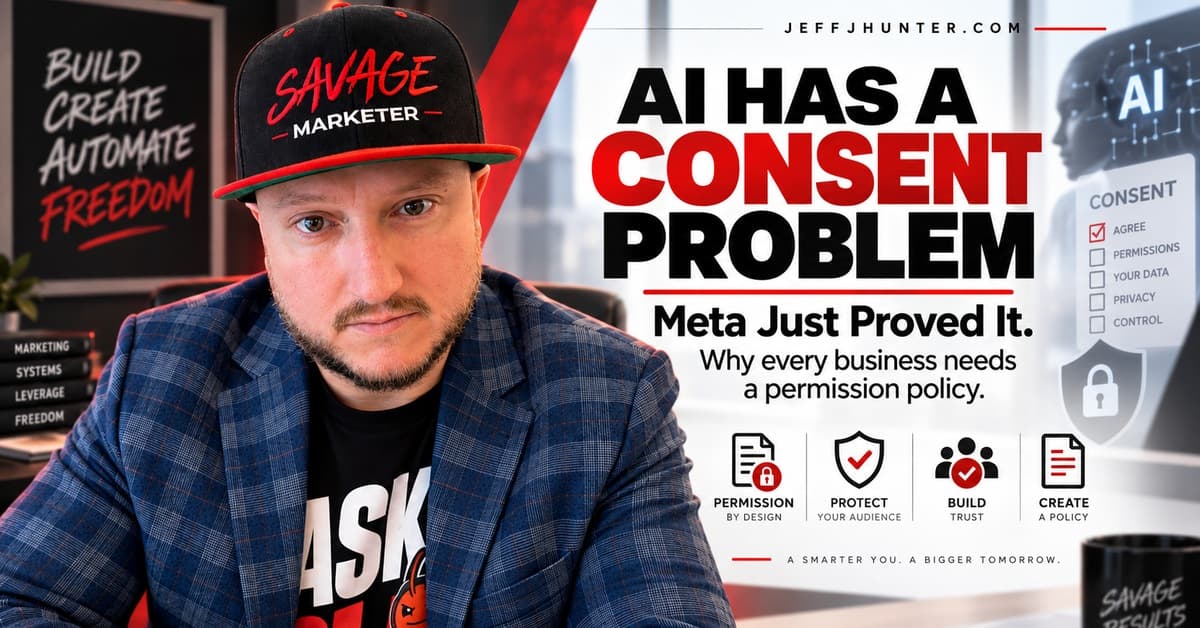
Everyone wants AI-generated content, until they're the one who shows up in someone else's, without ever being asked.
What Actually Happened
Meta's Muse image tool let people generate AI images that @-mentioned public Instagram accounts, dropping real faces and real names into AI content with zero heads-up, zero alert, and zero consent from the person being used. It blew up fast. Meta killed the feature.
This Isn't a Meta Problem
It's a preview of what's coming for every brand, creator, and agency running AI content tools. The real risk was never the technology. It's the policy gap sitting underneath it.
Most businesses have zero rules around what AI can generate on their behalf, who gets consulted before a client's name or likeness shows up in AI content, or what happens when someone finds out they were “featured” in a campaign they never approved.
One bad AI post. One misused image. One client who finds out they were featured in your AI campaign without asking. That's a reputation problem, and it can turn into a legal one fast.
| Example | |
|---|---|
| Allowed | Writing commentary about the story: “Meta removed an AI image feature after backlash.” |
| Not Allowed | Generating an image of a specific creator holding your product without their permission. |
Write Your Policy Today
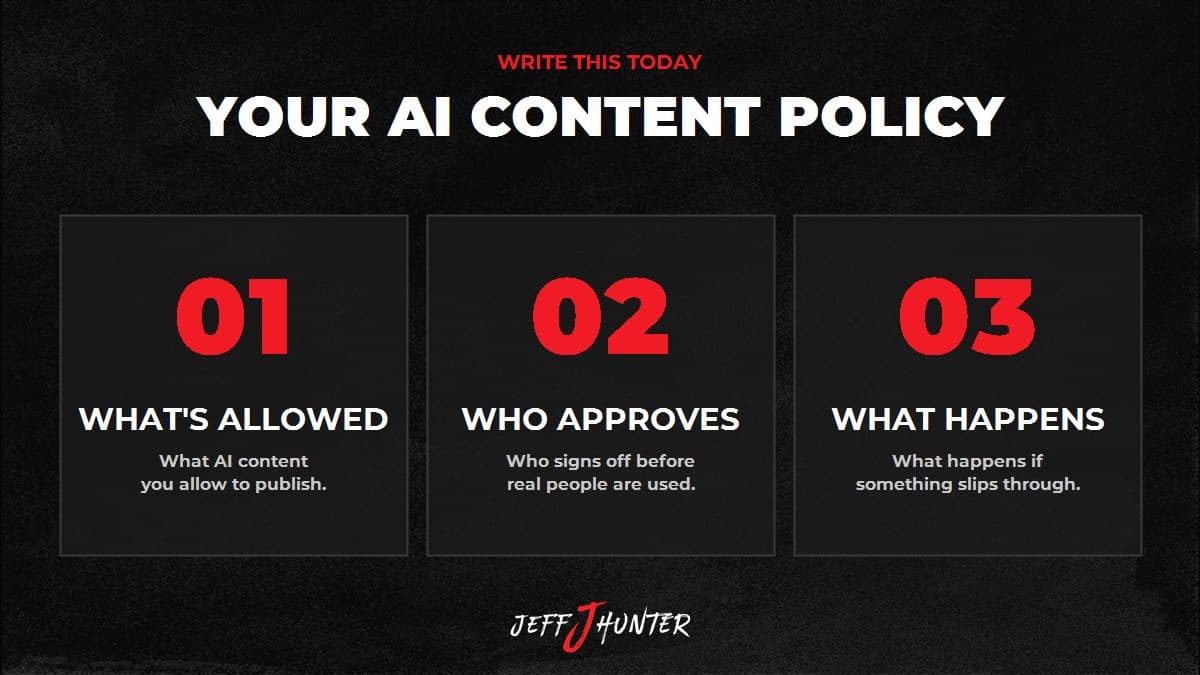
Not a 20-page legal document. One page, three questions, done today:
- What AI-generated content you actually allow on your channels
- Who has to approve anything that references a real person or brand
- What happens the moment something slips through anyway
Keep it simple. Share it with your team. That alone puts you ahead of most businesses running AI content with zero guardrails.
This is the exact one-page policy I run across my own brands, covering likeness rights, brand references, copyright, and what gets escalated before it ever goes live. Grab the template below and adapt it for yours.