
Become an AI Expert: The Practical Path (No CS Degree Required)

When people hear "AI expert" they picture a PhD writing neural networks from scratch. That is one path. It is not the one most operators need. The faster, higher-demand path is practical: learning to wield AI tools to get real business results.
What "AI Expert" Even Means
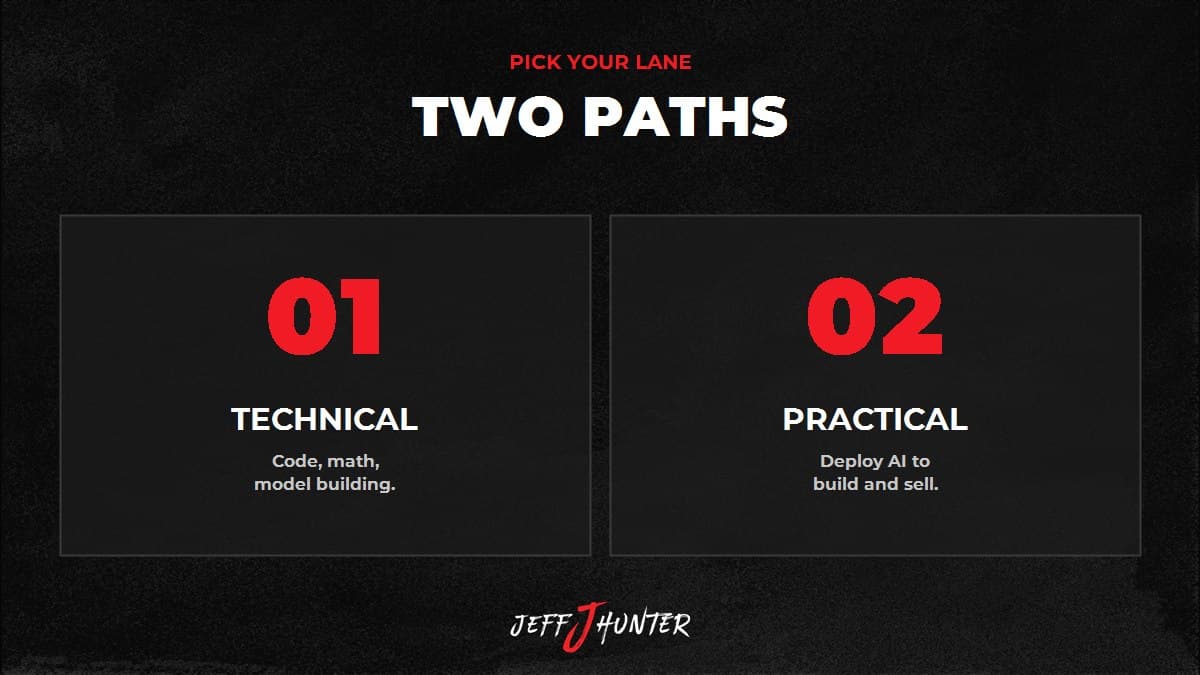
An AI expert understands the principles, techniques, and applications of AI systems well enough to get results with them. That splits into two paths. There is the technical expert: programming, math, model architecture, the person building the tools. And there is the practical expert: the entrepreneur or marketer who deploys those tools to build, sell, and scale a real business. Both are valuable. But you can become genuinely dangerous on the practical path in months, not years, and that is where most of the money and leverage is right now.
Why This Matters More Than Almost Any Other Skill
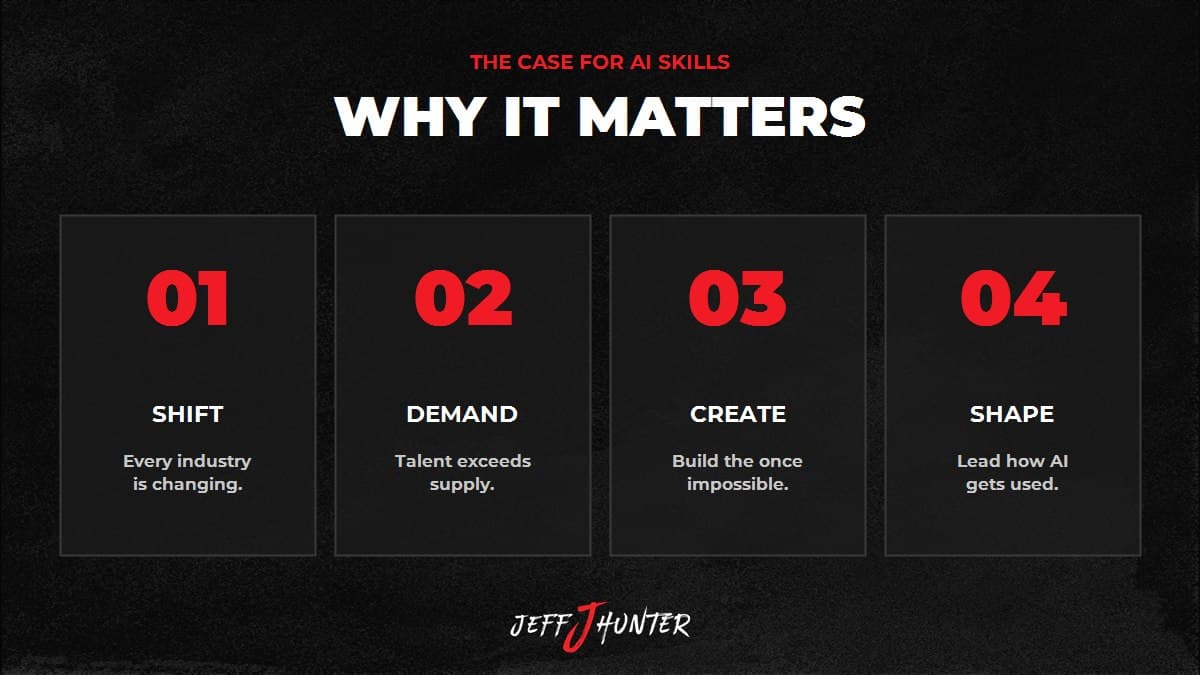
- It is transformative. AI is reshaping how every industry operates, from healthcare to finance to marketing. Sitting it out is not a neutral choice.
- Demand exceeds supply. AI-fluent roles are among the fastest-growing in the world, with double-digit annual hiring growth and compensation to match.
- The creative ceiling is gone. AI expertise lets you build things that were flat-out impossible a year ago, from a one-person content engine to a generative product.
- It comes with responsibility. As AI embeds deeper into the systems we rely on, the people who understand it shape how it gets used. Better that includes you.
Your Roadmap to Expertise
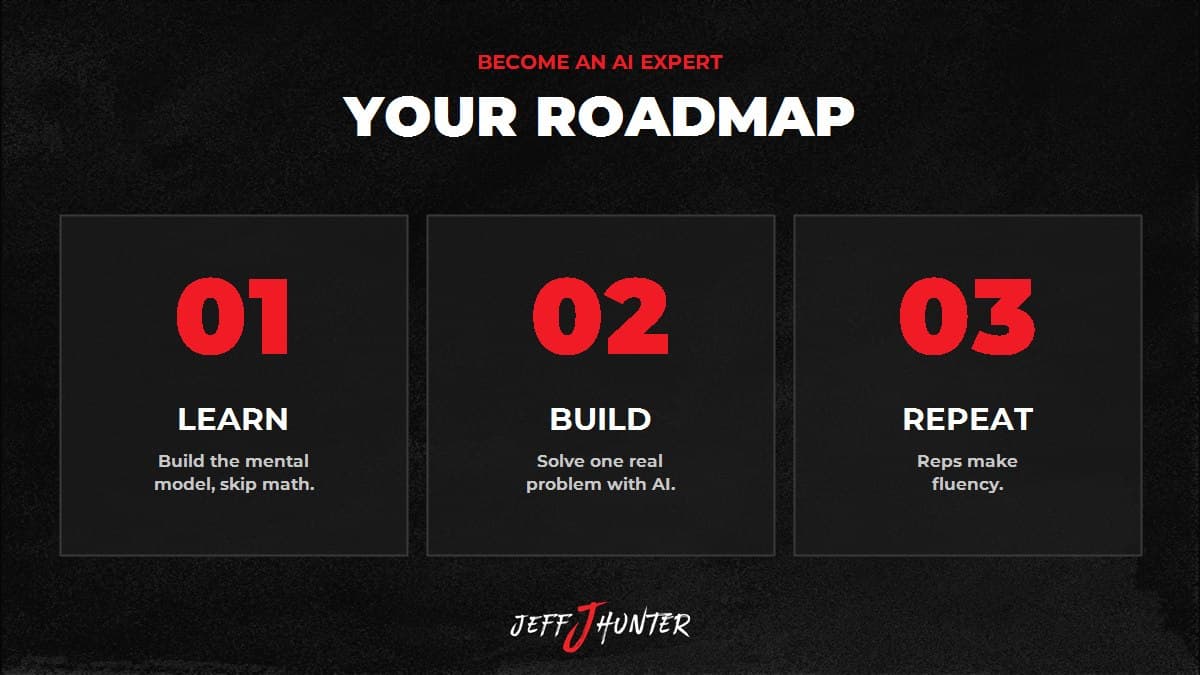
- Learn the basics. Build a solid mental model of what these tools actually do and where they break. You do not need the math. You need to understand the machine well enough to direct it.
- Get hands-on immediately. Start simple and real: a content system, an outreach workflow, a research assistant for your own business. You learn AI by using AI, not by reading about it.
- Live in the tools. ChatGPT, Claude, Midjourney, Gemini, Jasper, Opus Clip, and purpose-built tools like AICopyTools. Fluency is a function of reps, nothing more.
The fastest way to become an AI expert is to solve one real problem in your own business with AI this week. Theory is cheap. A working deployment teaches you more than ten courses.
Learning Pathways
If you want structure, there is plenty. Online platforms like Coursera, edX, and Udacity cover the fundamentals, and I run a business-focused AI consulting program for people who want the practical, money-making path specifically. If you prefer to teach yourself, the resources are abundant: framework documentation, tutorial sites, open-source projects you can contribute to, and the single best teacher of all, personal projects that solve a real problem you actually have. The technical crowd will point you to textbooks like "Deep Learning." The practical crowd will tell you to go build something today. Both are right for their path.
Why This Is the Strategic Move
Demand for AI-fluent people is outrunning supply across tech, healthcare, finance, marketing, and manufacturing, the work is often remote-compatible, and the pay is premium. But the bigger opportunity is not getting hired. It is becoming the operator who builds things that were impossible a year ago: a one-person content engine, an AI sales team, a brand that punches ten times above its headcount. That is the difference between being disrupted by AI and being the one doing the disrupting. You get to be the creator shaping the future instead of the worker bracing against it.
Start Now
The community shares everything openly, the tools have never been more accessible, and the bar to "expert enough to get paid" has never been lower. The journey combines technical comfort with creative problem-solving and a habit of continuous learning, but it does not start with a degree. It starts with one action. Pick one tool. Solve one problem. Then do it again. That is the whole path, and it starts this week.