AI Copy Generators: Are They Actually Worth It?
AI copy generators are either the best thing that ever happened to your content, or the fastest way to fill your brand with forgettable slop. Same tools. The difference is entirely in how you use them.
An AI copy generator is a writing assistant powered by AI that creates content from patterns it learned across millions of existing texts. Point it at blog posts and outlines, marketing copy like product descriptions and ad variations, email subject lines, social posts, even routine business communication. Used well, it is not a replacement for a writer. It is a collaborator that handles the blank-page grind so you can spend your time adding the value only you can: expertise, judgment, and a point of view.
The Real Benefits
When the workflow is right, the upside is not subtle.
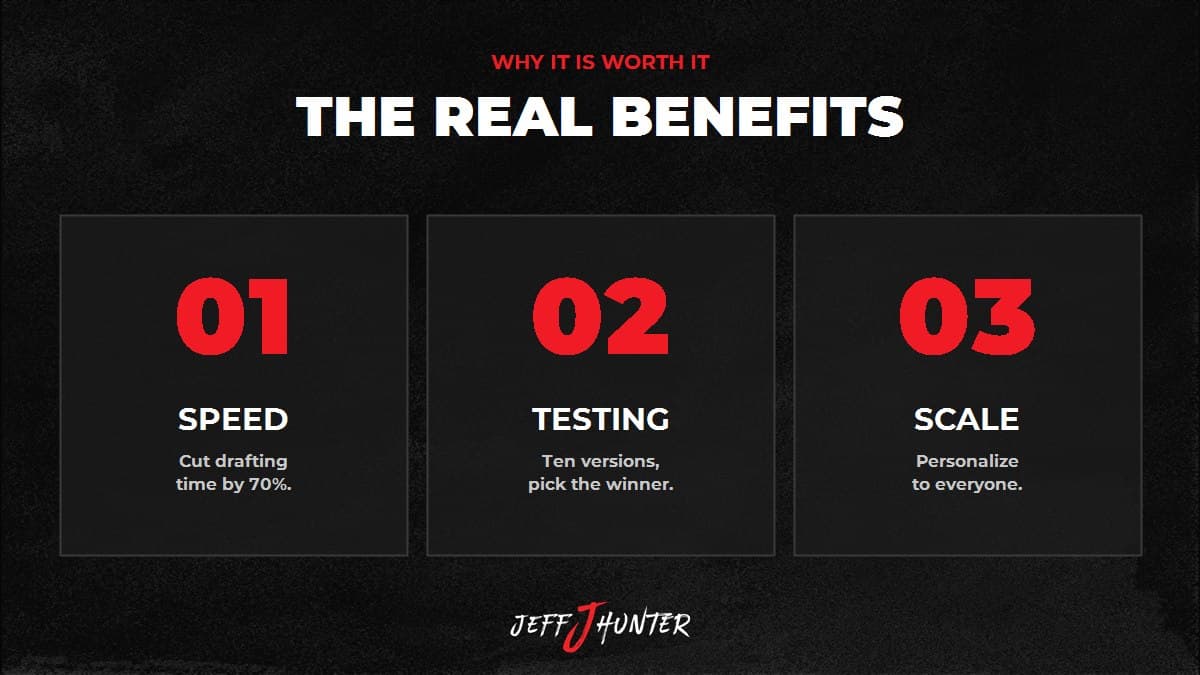
- Accelerated production. One agency I know cut content creation time by 70% using AI for first drafts, turning hours of work into minutes. They also picked up 374 new LinkedIn followers off the extra volume.
- Better testing and optimization. When you can generate ten versions of an ad or headline in seconds, you test more, find winners faster, and drive your cost per click down.
- Personalization at scale. One retailer saw a 25% lift in engagement after rolling out AI-generated personalized product descriptions, the kind of thing that would never be worth the manual hours.
The Trap Everyone Falls Into
The trap is shipping the first thing the AI gives you. Raw AI output is generic, sometimes factually wrong, and rarely sounds like your brand. I have watched a software company tank its blog engagement by leaning on AI with no human in the loop. The tool was not the problem. The missing process was.
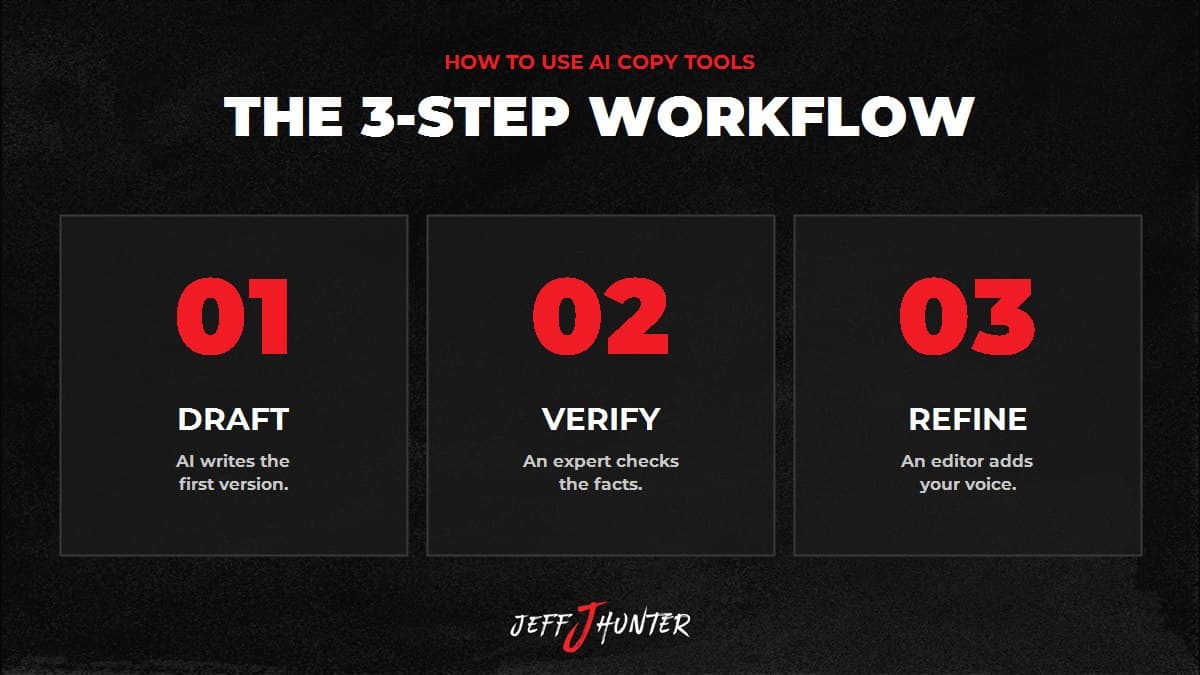
The workflow that works every time: AI generates the draft. A subject matter expert verifies it is accurate. An editor refines it into your brand voice and adds the insight a machine could never have. Three steps. Skip the last two and you get slop at scale.
The companies that get this right always use the hybrid approach: AI for research and initial drafts, humans for the case studies, the original insight, and the consistent voice. The AI makes you faster. The humans keep you worth reading.
The Tools Worth Knowing
There is an option at every price point and skill level. Here is the honest lay of the land:
| Tool | Best For | Why It Stands Out |
|---|---|---|
| AICopyTools | Social, email, leads & sales | Built by marketers, conversion-optimized, no prompt engineering required |
| Copy.ai | Social media, short-form | Friendly interface, fast to learn |
| Rytr | Beginners, basic content | The affordable entry point |
| Jasper | Long-form content | Strong team collaboration features |
| Writesonic | E-commerce | Product descriptions with built-in fact-checking |
I built AICopyTools specifically for marketers because the general-purpose tools make you do too much prompt engineering before you get to usable copy. Whatever you pick, the rule is the same: choose one, learn it deeply, and build your process around it before you go collecting more.
How to Actually Implement It
Treat this like installing a system, not trying a toy. Three stages (and if you want the deeper build, my complete guide to AI copywriting tools walks through each one):
- Plan. Define measurable content goals, write down your quality standards and brand guidelines, and build a template library for the content you produce most. Garbage brief, garbage output.
- Create. Write a detailed brief, let AI draft, pull in a subject matter expert for the real-world insight, have an editor align it to brand, and run a final quality check before it ships.
- Monitor. Track engagement, conversions, and time saved. Collect feedback from the team using the tools. Then refine the workflow based on what the data tells you.
So, Is It Worth It?
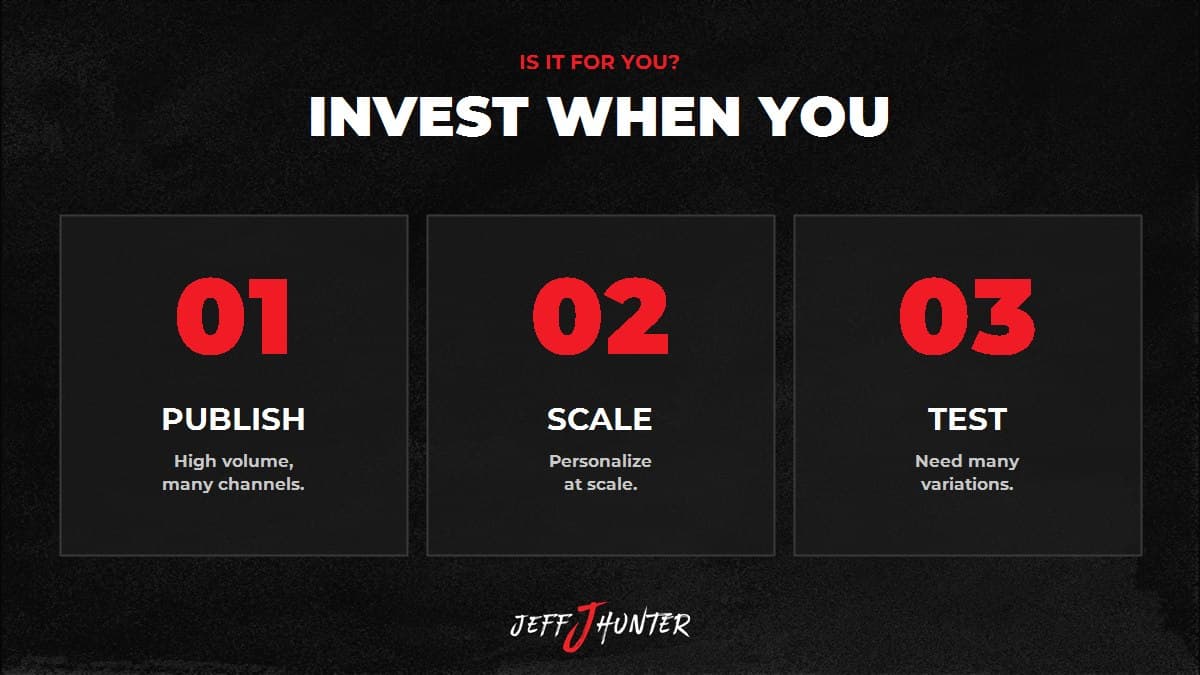
Invest if you produce real content volume across multiple channels, you are scaling personalization, or you test frequently and need lots of variations. It pays off fastest when you already have an editing process, you plan strategically, and you treat AI as the engine rather than the driver. The future of these tools is only sharper: better language understanding, industry-specific knowledge, multi-format output, real-time personalization. But human creativity and authentic connection stay essential, and that is exactly where you should be spending the time AI gives back to you.
Start small. Pick one content type, hold it to your standard, measure the result, and scale what works. The goal is not to become less human. It is to free your humans to do the part only they can.