How is the Philippines Upskilling its BPO Workforce for AI in 2026? Transforming Disruption into Business Value

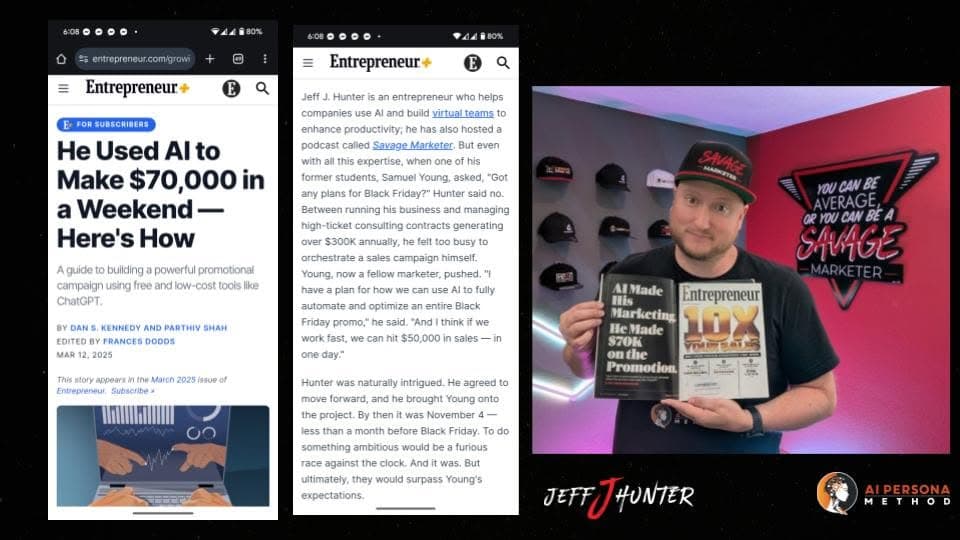
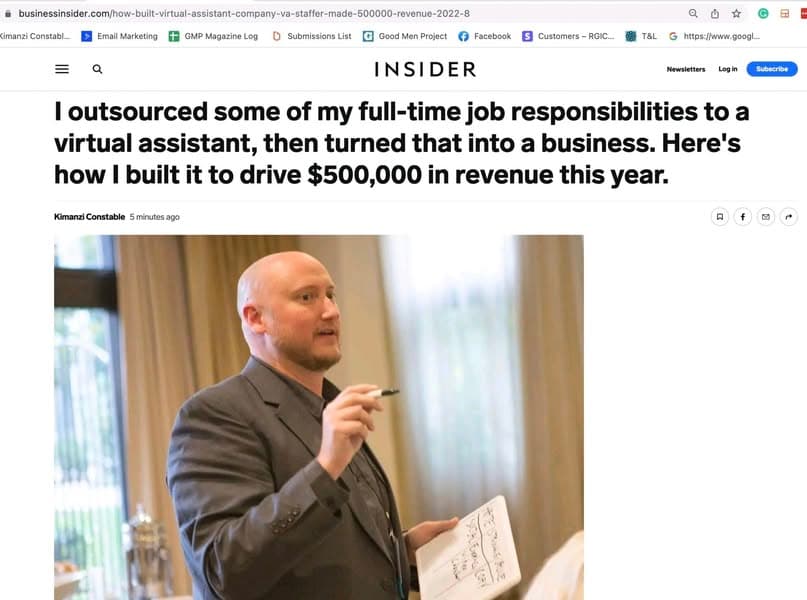
The Business Manual called me because I'm not theorizing about AI and outsourcing from the outside. I've been running a Philippines-based team since 2014. Managing editor Patricia Mirasol was reporting on the entire IT-BPM sector, an industry worth 8% of the country's GDP, and wanted the view from someone with an actual team on the floor.
What I Actually Told Her
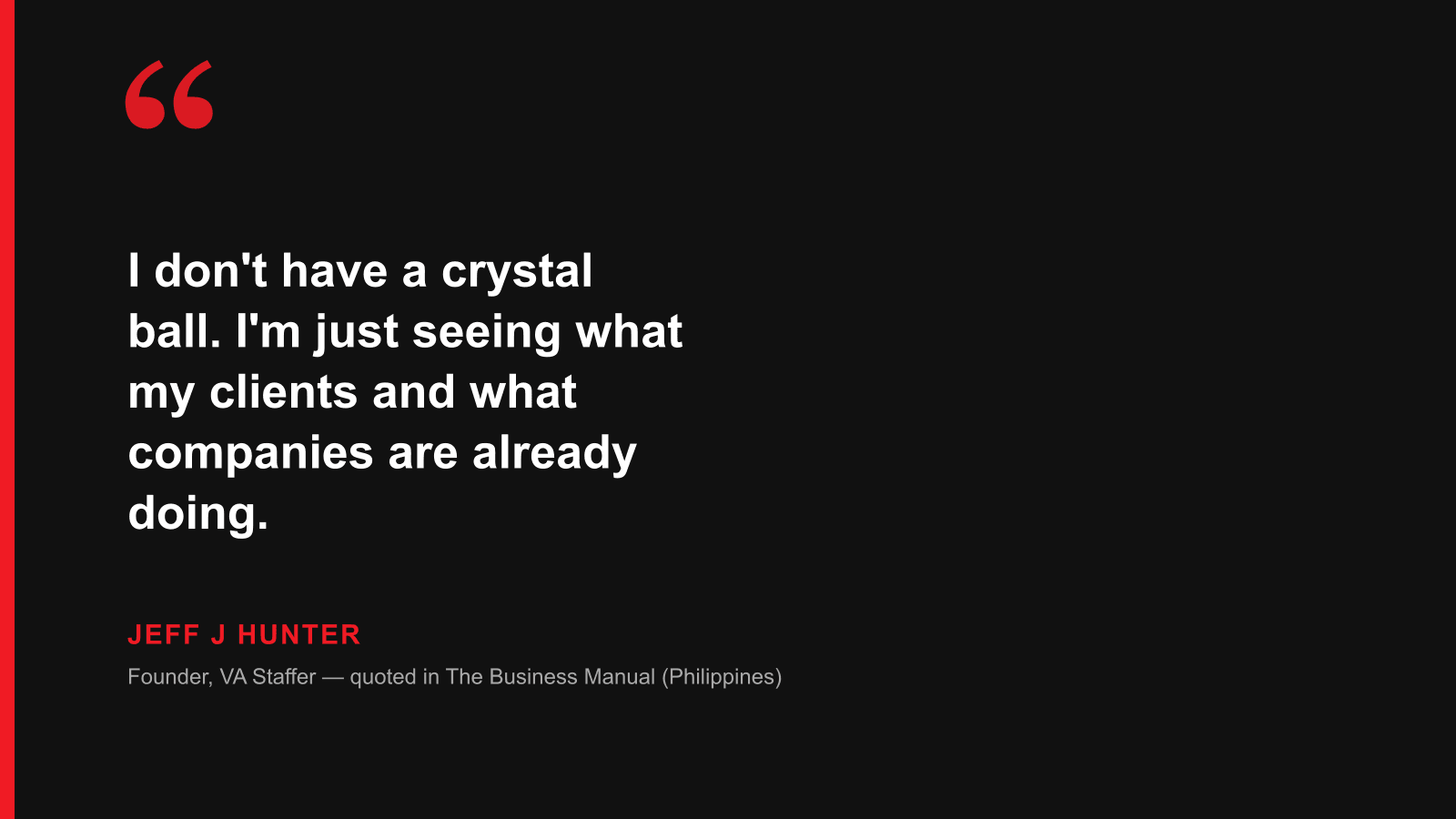
That was the honest version, over Zoom, in December 2025. One AI agent can already answer 1,800 concurrent calls in fluent English, a fraction of what a live BPO floor used to need for that same volume. And the price of that automation keeps dropping, which is exactly what forces the conversation I'm now hearing on ops floors, not just in strategy decks:
"Right now, people are saying, 'Do I really need to hire a person, or can we make Joey from Accounting, whose job is being taken over by AI, do something else?'"
Why This Interview Matters
The IMF estimates about 3% of Philippine workers sit in BPO roles with low AI complementarity, meaning the technology replaces the human rather than assisting them. On a workforce that size, in a sector this "macro-critical" to the national economy, that 3% is a real number of real jobs, not a rounding error. Being one of the voices a national business publication calls for that story is the validation that matters most to me: it means the Humans + AI model I've been building isn't just marketing copy, it's holding up under scrutiny from people covering the industry, not just the AI hype cycle.
Takeaways
- One AI agent can already handle 1,800 concurrent calls in fluent English. That's the baseline BPO floors are now competing against.
- The cost of that automation is still falling, which is what turns "could AI do this role" into "why are we still paying a person to do this role."
- About 3% of Philippine workers are in BPO roles the IMF flags as low AI complementarity, meaning replacement risk, not augmentation. BPO is 8% of Philippine GDP, so that risk is macro-critical, not a niche concern.
- The jobs that survive are the ones where a person still catches what the model gets wrong, not the ones where a person is just executing a script AI can already run.