AI Copywriting: Write Smarter, Personalize Better, Convert More
Content creation has quietly flipped. The bottleneck used to be production - getting words on the page. Now production is nearly free, and the bottleneck is judgment: deciding what to say, to whom, and how to make it convert. AI copywriting is about winning that second game, not the first.
At its core, an AI copywriting tool is a pattern engine. It has read billions of examples, learned how good writing tends to flow, and can now generate everything from a subject line to a full article while holding a consistent voice. Point it at the right brief and it does in seconds what used to take an afternoon. That is the upside. The catch is that the same tool, pointed carelessly, fills your brand with forgettable filler at record speed.
What AI Copywriting Actually Produces
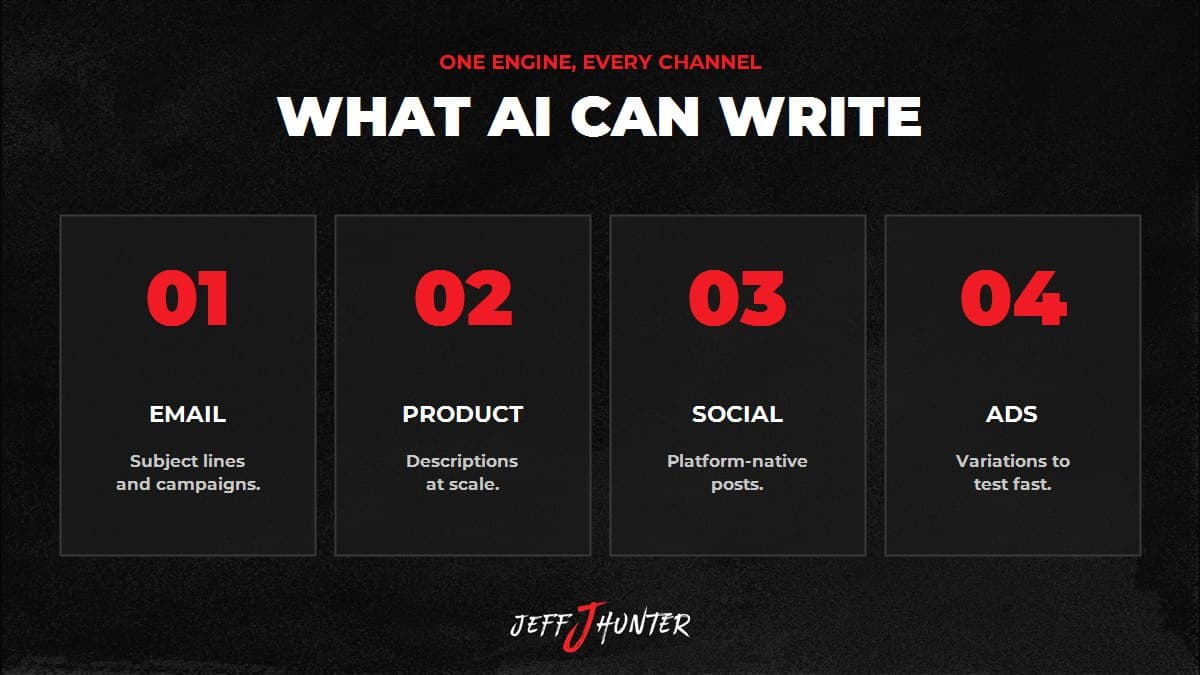
The best tools are genuinely good now across a wide spread of formats. The ones that move the needle for marketers:
- Personalized email campaigns. Feed it customer data and it writes variations of subject lines, body copy, and calls to action tuned to each segment instead of one generic blast.
- Product descriptions at scale. Unique, on-voice copy for an entire catalog, each one highlighting the right features without sounding copy-pasted.
- Social content. Platform-native posts that respect the format and audience of each channel, generated as a set instead of one at a time.
- Blog posts and articles. Research organized, outlines built, first drafts structured for SEO - so you start from a draft, not a blank page.
- Ad variations. Ten angles in the time it took to write one, so you test more and find winners faster.
The Part Everyone Skips (And Pays For)
Raw AI output is a first draft, never a final one. It is generic by default, occasionally confident and wrong, and it does not sound like you until you make it. The teams that get burned are the ones that ship the first thing the model gives them. The teams that win run every piece through a simple loop: AI drafts, a subject-matter expert verifies the facts and adds the real insight, an editor aligns it to your brand voice.
That is the same draft-verify-refine workflow I walk through in my complete guide to AI copywriting tools and the same hybrid model behind whether AI copy generators are worth it. AI makes you faster. The human keeps you worth reading.
How to Roll It Out Without the Chaos
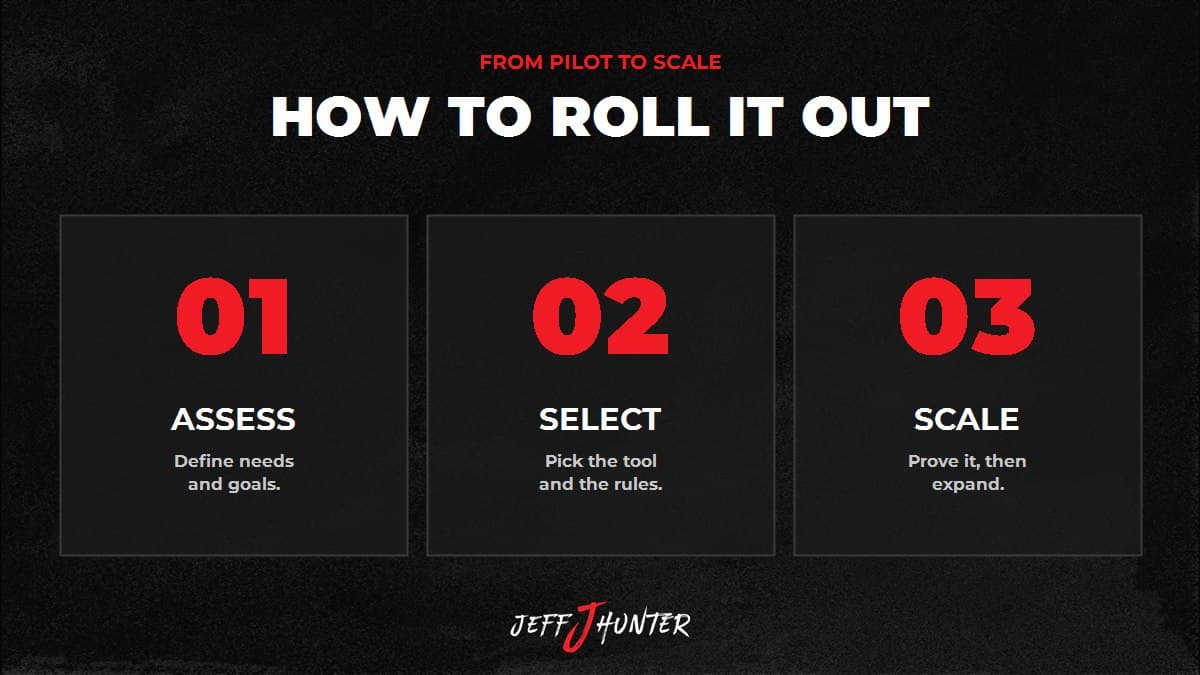
Do not try to AI-ify everything at once. Treat it like installing a system, in three moves:
- Assess. Look at your real content needs and volume. Decide which formats would benefit most, and define what quality and brand voice actually mean for you in writing.
- Select. Pick one tool that fits those needs, set clear rules for how it gets used, and build a small library of templates and brand guidelines to brief it well.
- Scale. Run a pilot on one content type, measure it against your old baseline, and only then expand to more formats and channels.
Where AI Copywriting Is Headed
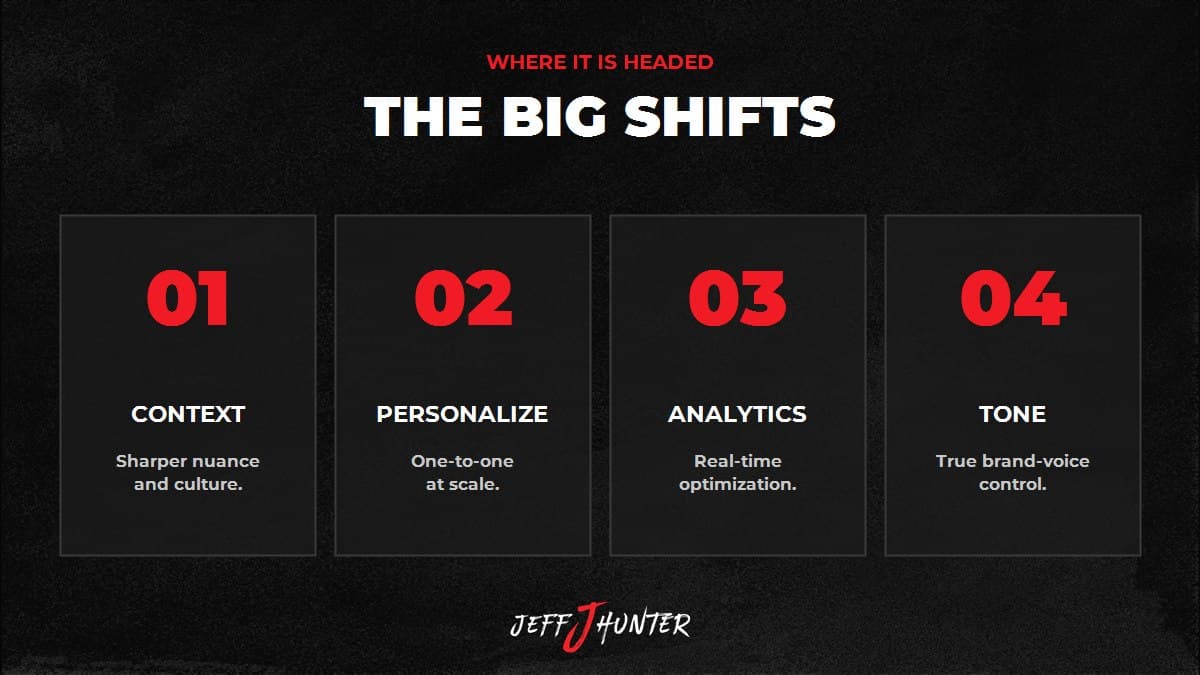
The trajectory is clear, and it is worth writing your strategy around:
- Sharper context. Models are getting much better at nuance, industry-specific language, and cultural cues, which means less editing to make output sound native.
- True personalization at scale. Content that adapts to each reader's behavior and history, generated individually rather than by broad segment.
- Live analytics integration. Copy tools wired directly into performance data, adjusting strategy in near real time based on what actually converts.
- Real brand-voice control. Systems that hold your specific tone consistently, from technical to conversational, without re-prompting every time.
Be transparent where it matters, protect customer data, watch for bias, and keep your communications authentic. The brands that pair AI's speed with real human standards are the ones that win the trust, not just the traffic.
AI copywriting is a genuine unlock. It is also not a strategy by itself. Combine the machine's speed and scale with your judgment, your proof, and your point of view, and you do not just publish more. You publish better, to the right people, at a volume that used to be impossible. That is the whole point of writing smarter instead of just writing more.